

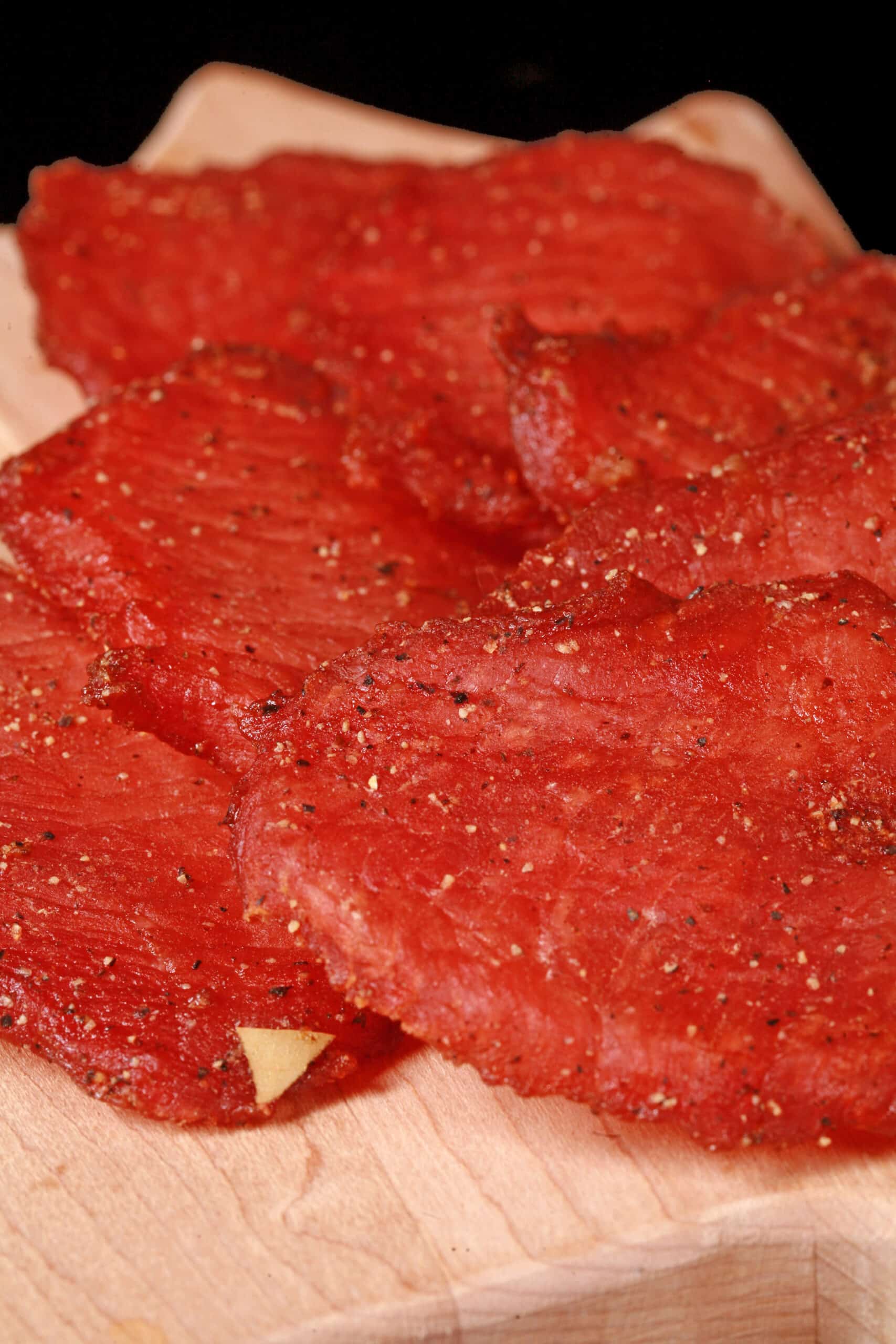
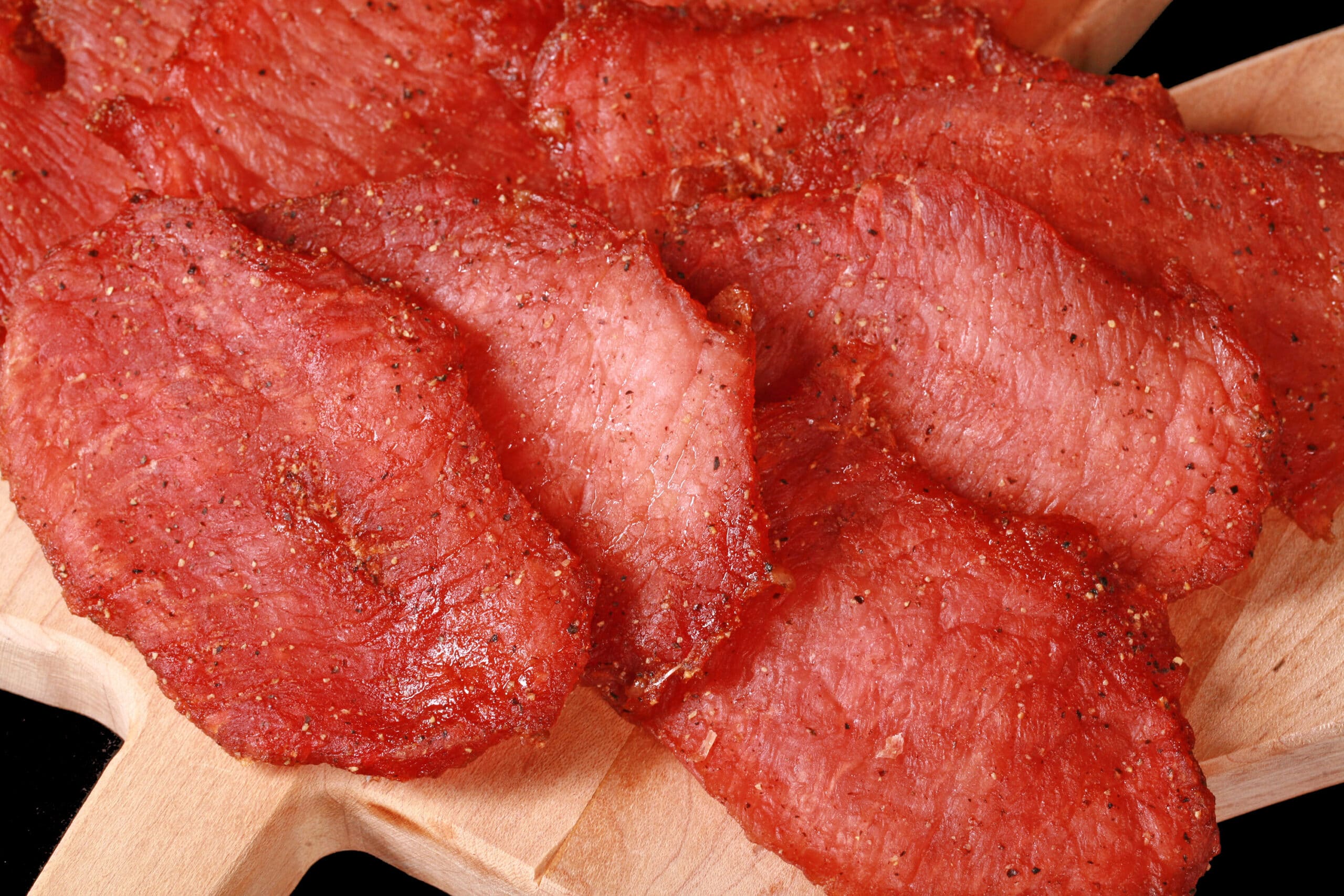
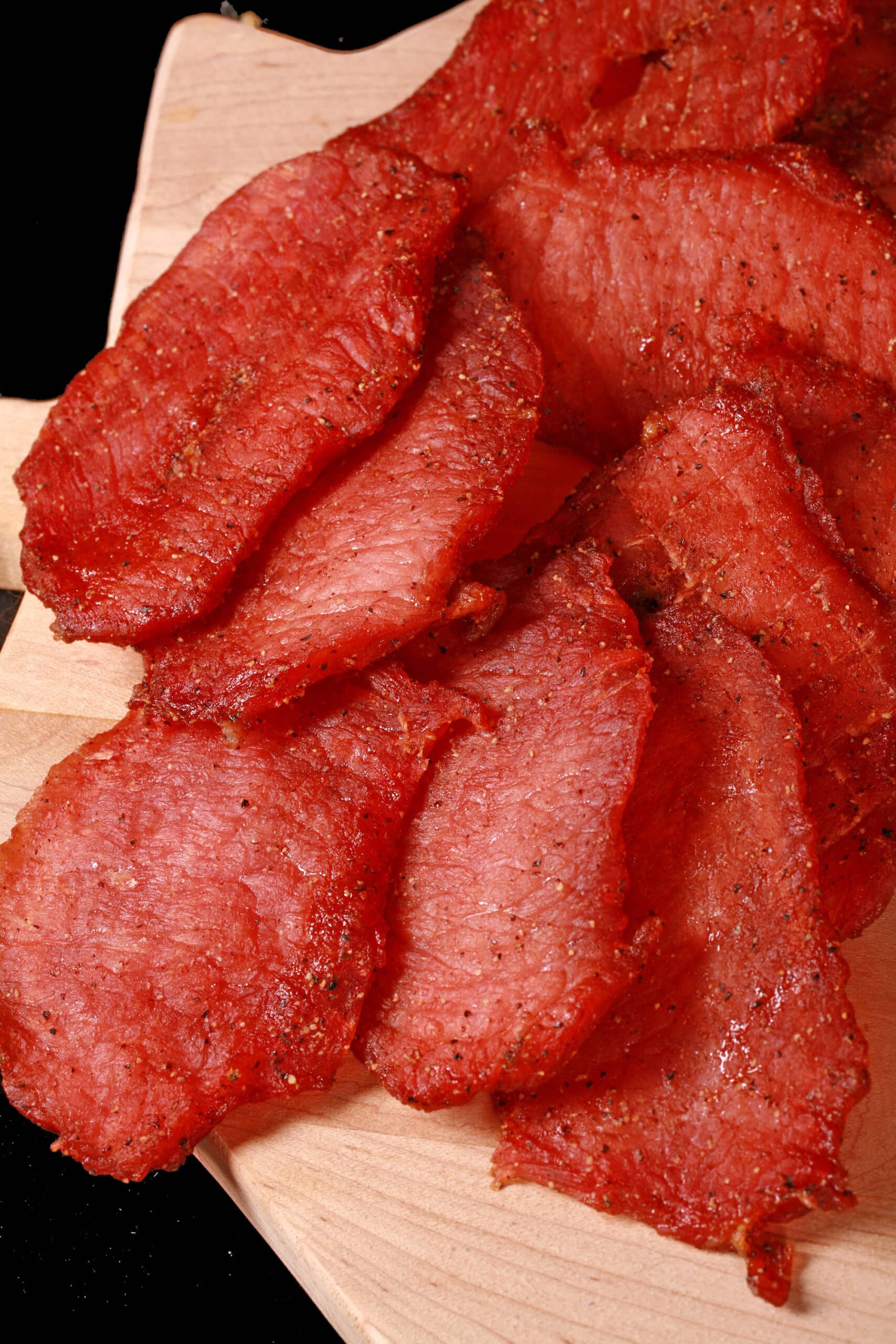
This Back Bacon Jerky recipe is an easy pork loin jerky, infused with the flavours of the Canadian favourite. A fun alternative to tradition!

Now is better than never though, right?
Anyway, this recipe is HEAVILY inspired by my actual Back Bacon Recipe - which was a staple for us when we were living outside of Canada.
Unlike “Canadian Bacon” - as some types of ham are called in the USA - Canadian Back Bacon is far more robust and flavourful.
Luckily, it’s super easy to make - homemade back bacon required very little effort when the craving hit. The worst was just the wait!
This Back Bacon jerky has all the flavour of traditional back bacon, but it’s quicker and easier to work up. It doesn’t need anywhere near as much marinating time, and spends a few - largely unsupervised! - hours in the food dehydrator to finish it up.
Much better than babysitting a smoker, IMHO!
Anyway, let’s look at what you’ll need for a batch of your own homemade Canadian Bacon Jerky!
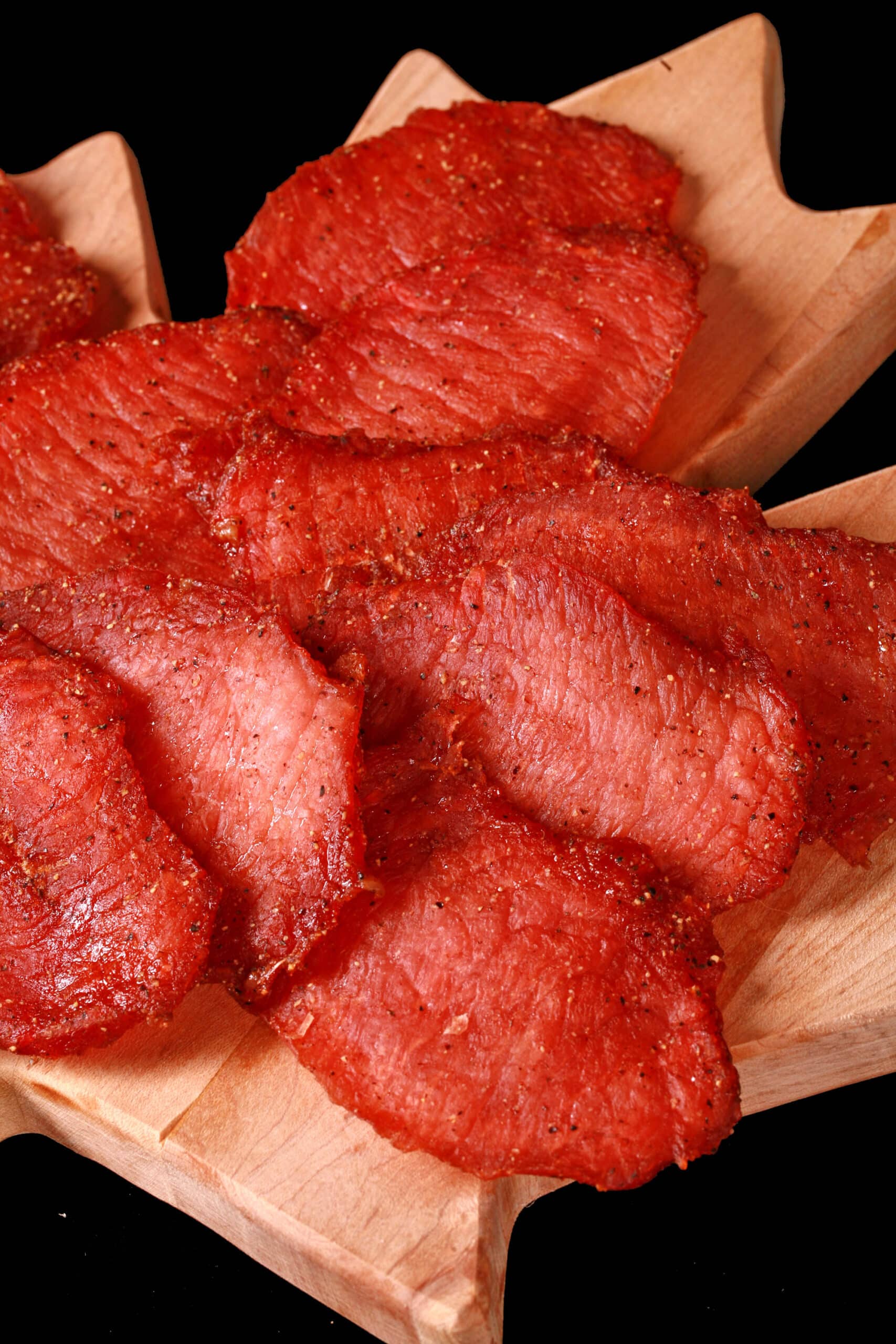
Equipment
Everything you need for making the pork jerky strips themselves are items you likely have on hand - bowls, spoons, measuring cups, etc.
The only specialized equipment you’ll need is a food dehydrator.
Sure, you might be able to make homemade back bacon jerky in a regular home oven, but I’m really not a fan of running one for hours on end.
A few years ago, I upgraded my old food dehydrator - with no temperature or time controls - to the Cosori 6 Tray Food Dehydrator, and LOVE it.
It was only something like $200 Canadian, and it’s paid for itself MANY times over, between all the Maple Cinnamon Apple Chips and jerkies I’ve been making!
Think of it this way - The same size of jerky that I tend to make goes for about $4 in a gas station.
I get about 10-15 strips out of a basic batch (varying by recipe) - let’s average that out to 12. That’s $48 worth of jerky, for $8 or less. Make 5 batches, that’s your $200 in savings!
Anyway, we’re using a dehydrator a LOT more, now that we have a nice one. Having the control over the temperature really opens up the possibilities!
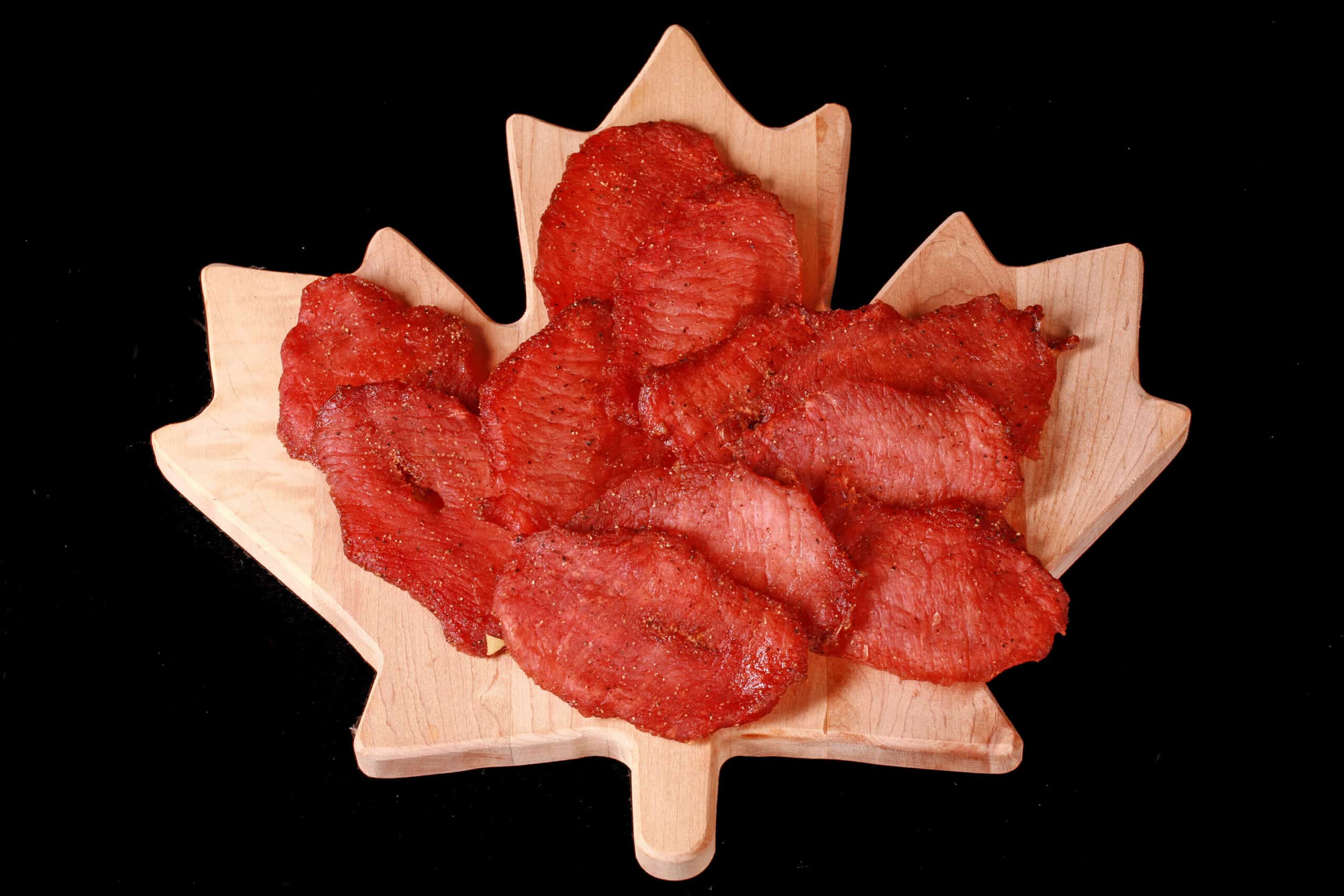
Ingredients
With only 2 exceptions, the ingredients in this Back Bacon jerky recipe are super simple - you probably even have them on hand!
As for those last two, they may be specialty ingredients, but I use them in pretty much all of my jerky recipes. They’re not too hard to find, and they’ll definitely get used, if you’re a jerky fan!
Some notes for you:
Pork Loin
You want a nice chunk of pork loin - not the smaller pork tenderloin.
Before slicing the pork loin up for this recipe, you’re going to want to cut off ALL the excess fat with a sharp knife - this will give you the best shelf life, as fat can go rancid.
Also - if you freeze it for 10-15 minutes before slicing it, it firms up a bit and makes it easy to cut nice, even slices.
Liquid Smoke
As with all of my jerkies, you’ll need some Liquid Smoke< - a little goes a lot way! I only use a small amount in this Back Bacon Jerky recipe, not only to give it a JERKY flavour, but because actual back bacon is smoked. The amount used here is not at all overpowering, just an accent.
Prague Powder
Prague Powder is one of a few different curing salts out on the market. It’s not something you’ll normally cook with, but it’ll last a long time - a little goes a long way!
I use Prague Powder #1 Cure, same as I use for my Montreal Smoked Meat Recipe, Back Bacon Recipe, Homemade Corned Beef Recipe, and Peameal Bacon Recipe.
This is a bright pink curing salt that’s a mixture of salt and sodium nitrite. It’s commonly used in cured meats - like pepperoni or summer sausages - and is what gives the jerky its characteristic red colour.
Beyond aesthetics, it also contributes to giving dehydrated meat that iconic jerky flavor, AND helps ensure that your homemade meat snack will be good to eat for a long time. It does this by preventing the growth of bacteria, during and after the drying process.
A couple of things to note:
1. Prague Powder is pink, but it is NOT the same thing as Himalayan pink salt!
2. Prague cure is only to be used in small amounts for curing meats, and should never be consumed as-is. The measurements are important - if you want a saltier Back Bacon jerky, add some regular salt, rather than increasing the curing salt.
Everything Else
Rounding out this recipe, you will need:
Coconut Aminos, Soy Sauce, or Tamari
Maple syrup
Dijon Mustard
Ground Black Pepper
Apple Cider Vinegar
Garlic Powder
Whole Cloves
Bay Leaves
... as always, I don’t really have anything to add, when it comes to these last few ingredients!
Note: The recipe software calculates nutritional information based on the ingredients listed, and has no way of even estimating how much of, say, the maple syrup is actually absorbed by the meat while marinating.
Share the Love!If you’ve made one of our recipes, be sure to take some pics of your handiwork! If you post it to Bluesky, be sure to tag us - @CelebrationGen. We're also on Pinterest, so you can save all your favourite recipes to a board! Also, be sure to subscribe to our free email newsletter, so you never miss out on any of our nonsense. Well, the published nonsense, anyway! |
How to Make Back Bacon Jerky
The full recipe is in the printable recipe card at the bottom of this post, here is the visual walk through:
Prepare & Marinate the Pork
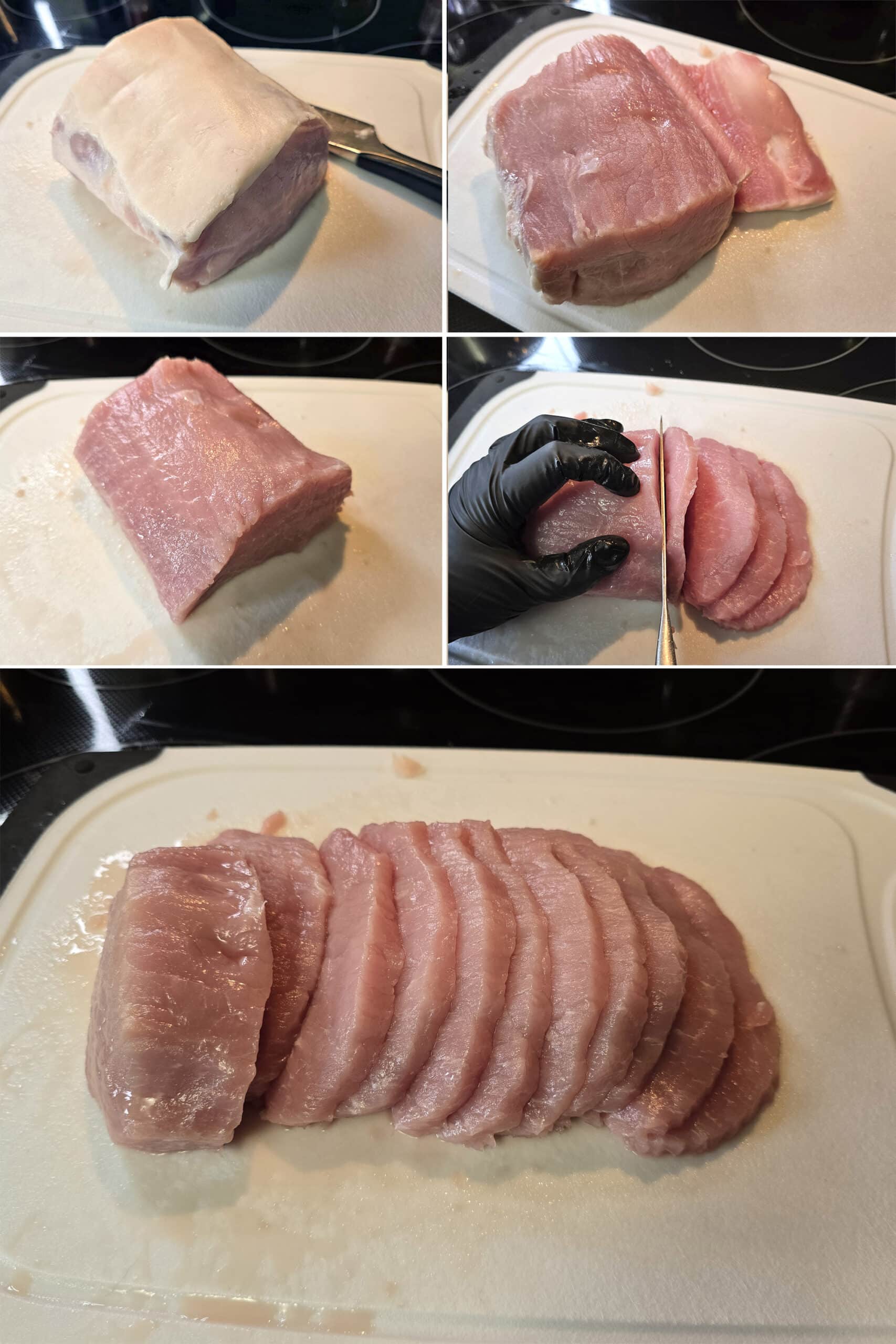
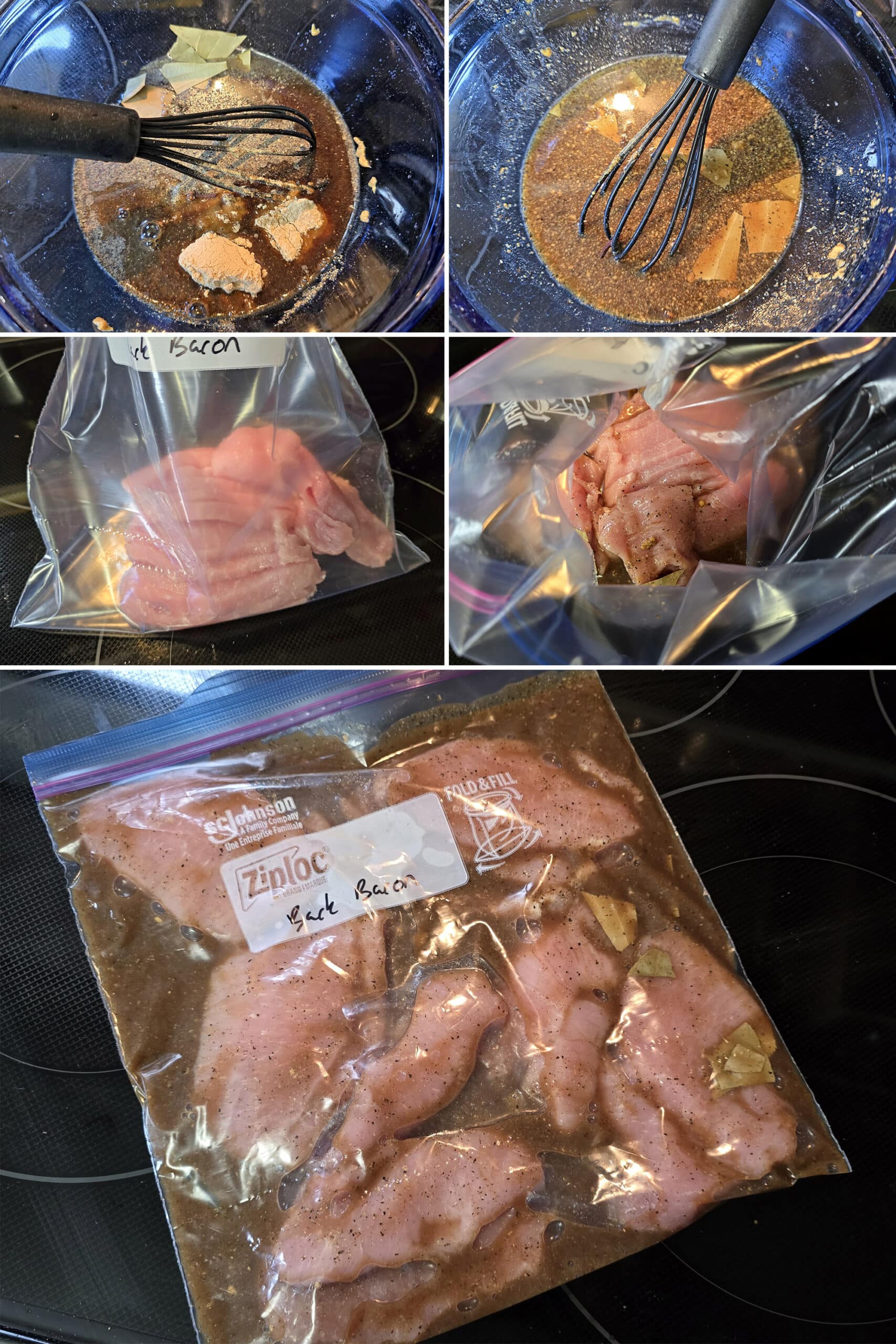
Trim ALL visible fat from the pork loin. Fat will go rancid, so - for best results - remove as much as you possibly can!
Slice pork across the grain. I like to aim for 3/16-¼" thick. You want to have the slices be relatively even thickness, for uniform drying.
Once all of the pork loin is sliced, place the slices in a large freezer Ziplock baggie.
Push out most of the air, seal the bags, and put them in the fridge – I like to put the bag in a loaf pan, just in case of leakage.
Chill in the fridge for at least 8 - and up to 24 - hours.
Dehydrate the Pork Loin
Once the marinating time is done, drain the pork slices - do not rinse. Arrange pork jerky slices on food dehydrator trays.
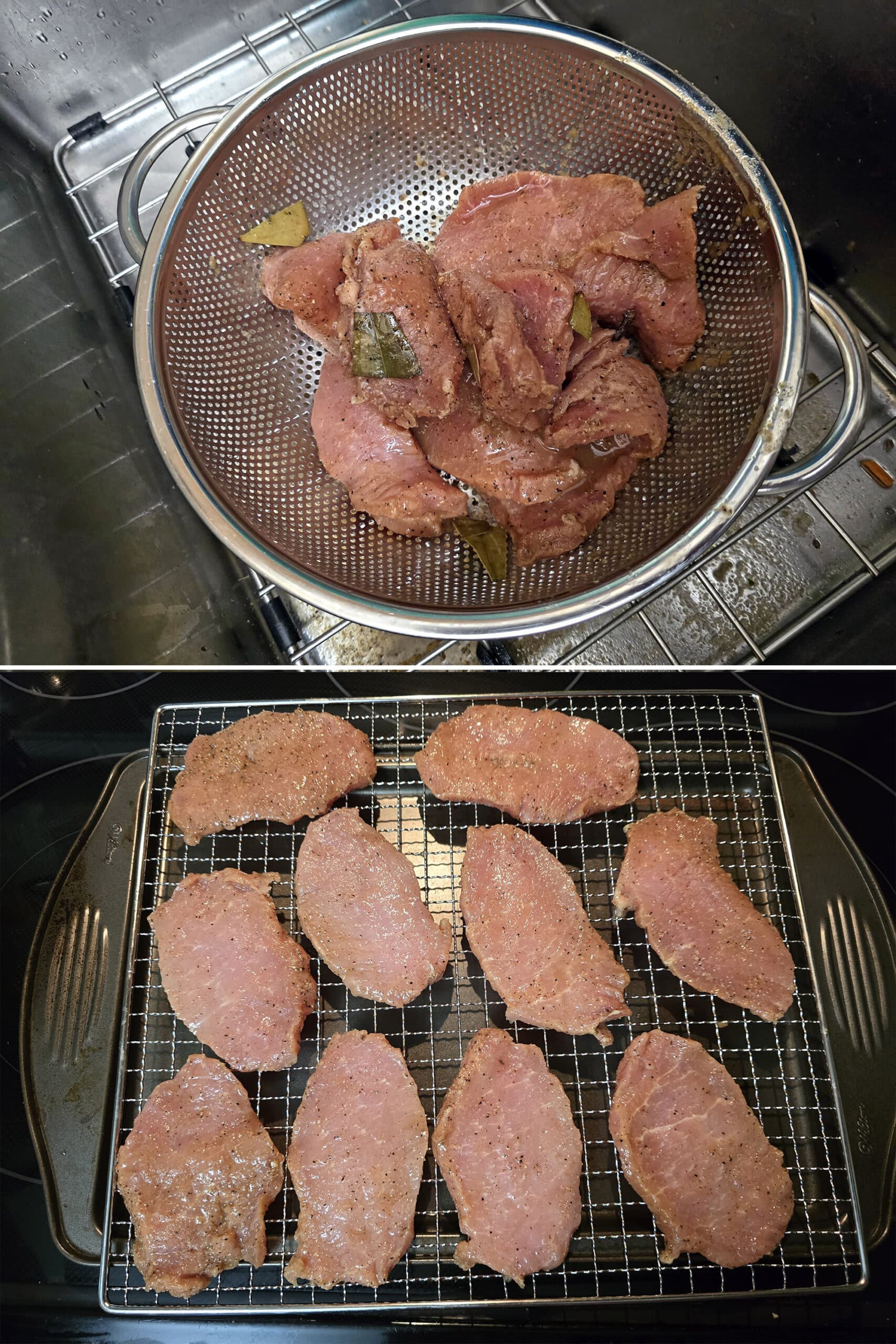
Dehydrate at 165 F for 2 hours.
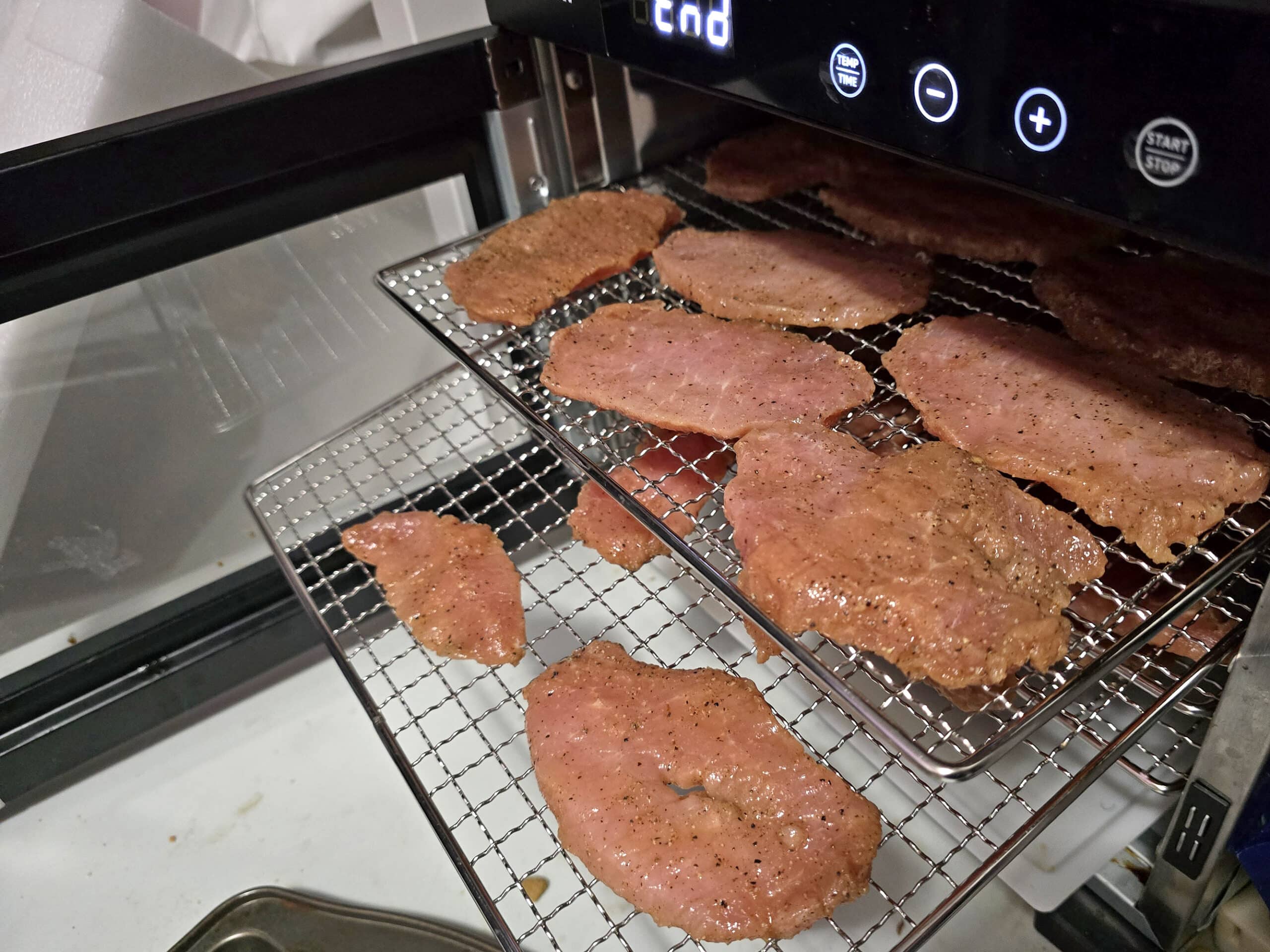
Continue dehydrating at 165 F for another 2 - 3 hours. (Actual time will depend on the thickness of the pork loin strips.)
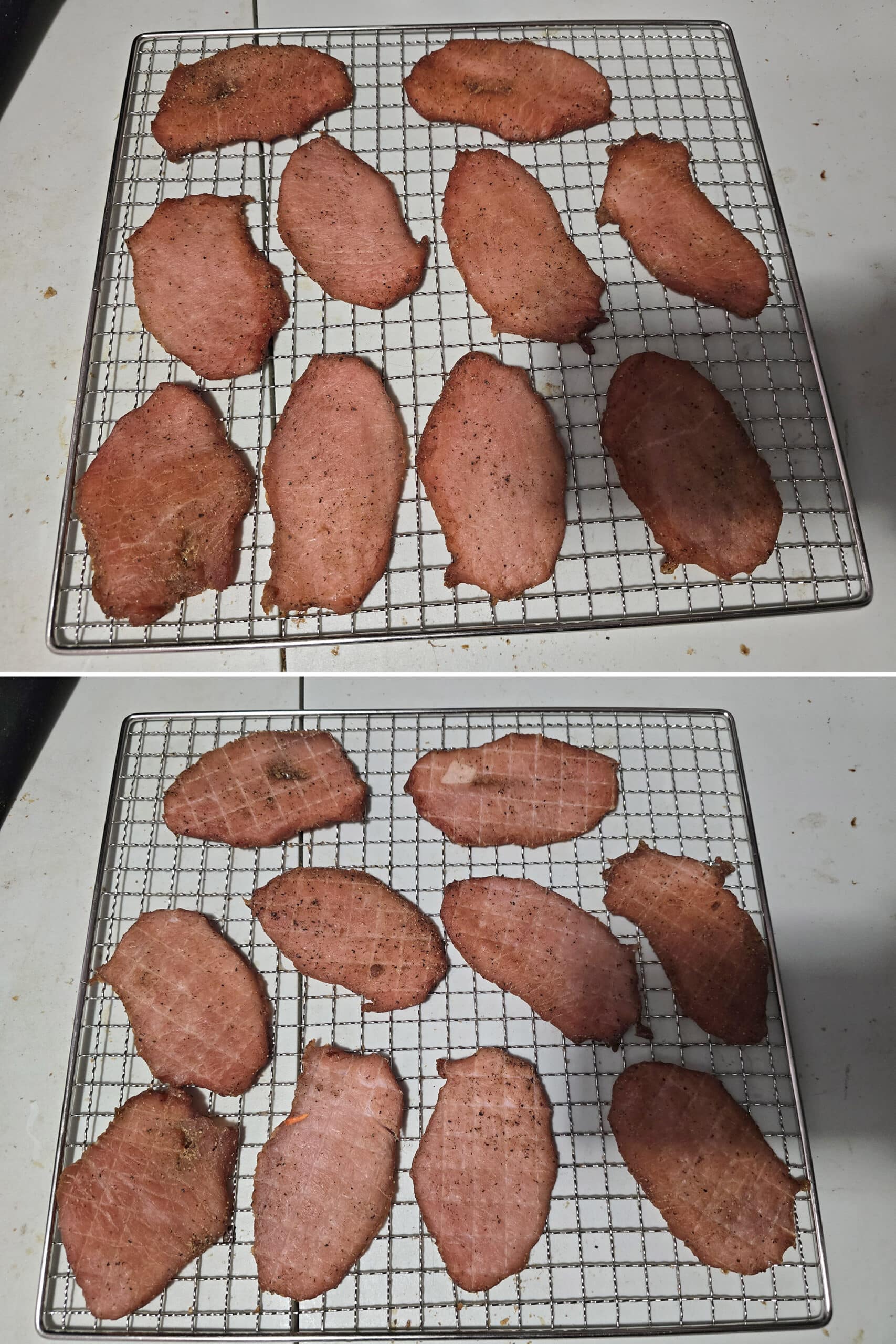
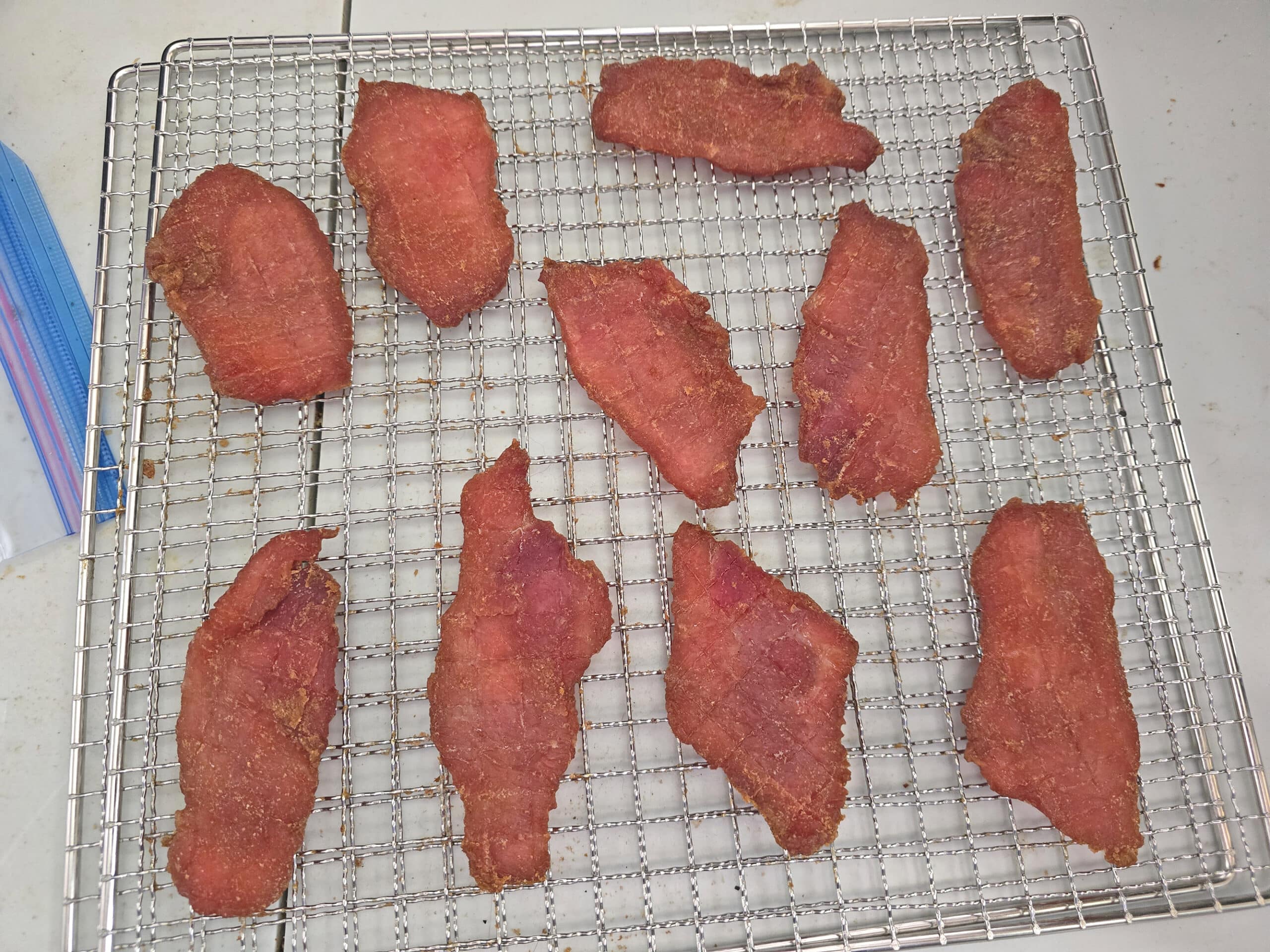
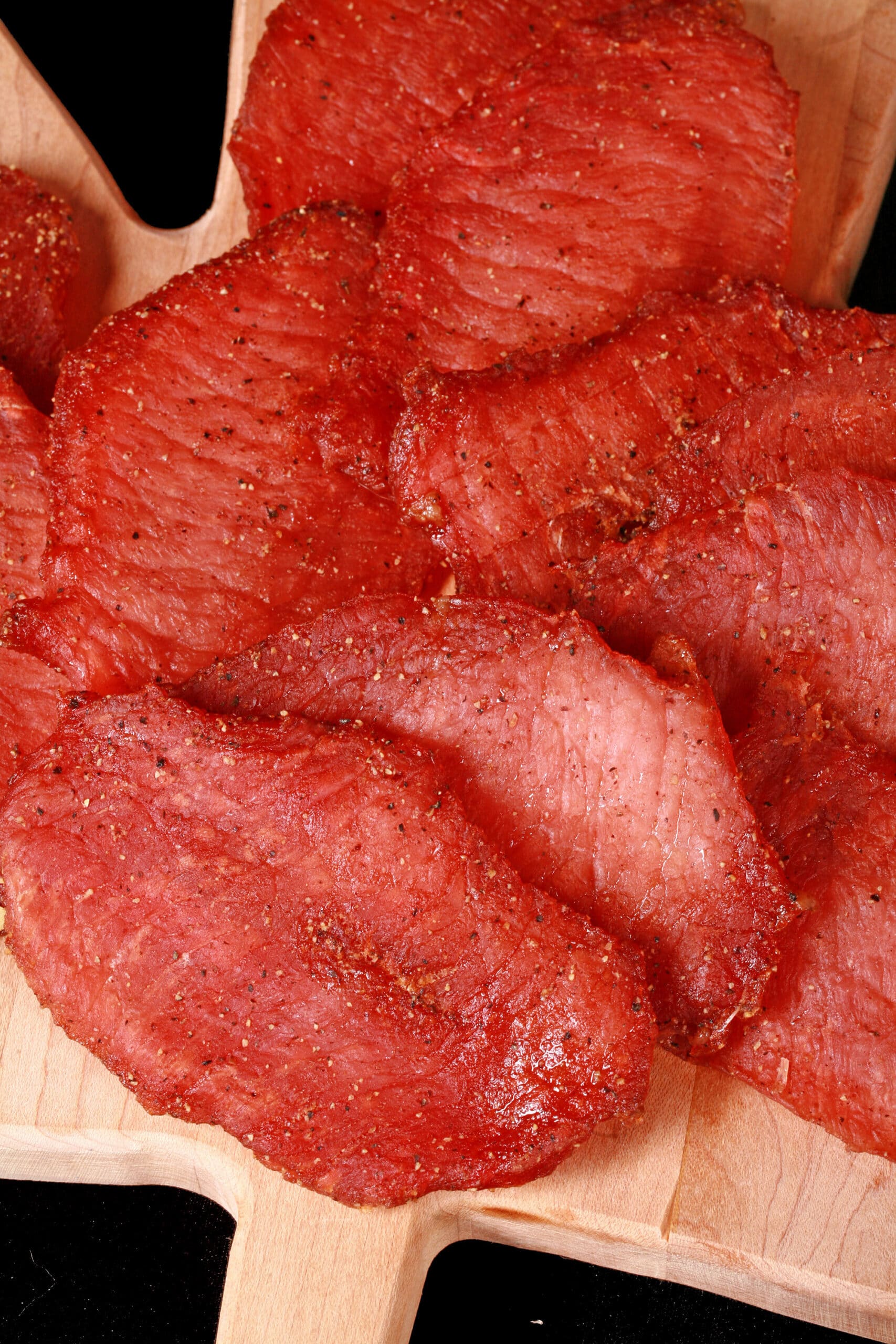
It should feel dry to the touch, but also be somewhat pliable. If you rip it, you want to see white threads - not pink.
Once jerky is all fully dehydrated, allow to cool to room temperature before packing and storing.
Pork Jerky Storage
Pork jerky will keep at room temperature (in a cool dark place) for a week or so, or a few weeks in the fridge.
If sealed into an airtight container WITHOUT OXYGEN, it should be good for a month or so in a cool dark place, a couple months in the fridge, and 6 months or so in the freezer.
Once you open your vacuum sealed bag of pork jerky, it should be eaten within a couple days - or a week, if put in the fridge after opening.
More Homemade Jerky Recipes
Are you someone who loves to bring jerky on road trips, hiking trails, and when camping? Me too! Here are some of my go-to recipes for homemade jerkies!
Basic Ground Beef Jerky
Blueberry Bison Jerky
Chipotle Chicken Jerky
Ginger Beef Jerky
Ground Venison Jerky
Homemade Salmon Jerky
Honey Garlic Chicken Jerky
Jalapeno Chicken Jerky
Jerk Chicken Jerky
Lingonberry Elk Jerky
Mango Habanero Chicken Jerky
Mushroom Jerky, 2 Ways
Pumpkin Spice Chicken Jerky
Rosemary & Blueberry Beef Jerky
Spicy Garlic Chicken Jerky
Sriracha Chicken Jerky
Tofu Jerky, 2 Ways
Pepperoni Jerky
Back Bacon Jerky - Canadian Pork Loin Jerky
Equipment
- Food Dehydrator
Ingredients
- 2 lbs Pork Loin
- ¼ cup Coconut Aminos Soy Sauce, or Tamari
- ¼ cup Maple syrup
- ¼ cup Water
- 1 tablespoon Dijon Mustard
- 1 tablespoon Ground Black Pepper
- 1 tablespoon Apple Cider Vinegar
- 1 tablespoon Garlic Powder
- 1 tablespoon Liquid Smoke
- ½ teaspoon Prague Powder #1 cure
- 3 Whole cloves
- 2 Bay leaves
Instructions
- Trim ALL visible fat from the pork loin. Fat will go rancid, so - for best results - remove as much as you possibly can!
- Slice pork across the grain. I like to aim for 3/16-¼" thick. You want to have the slices be relatively even thickness, for uniform drying.
- Once all of the pork loin is sliced, place the slices in a large freezer Ziplock baggie.
- In a medium bowl, whisk together the remaining ingredients, then pour this marinade over the pork slices.
- Push out most of the air, seal the bags, and put them in the fridge – I like to put the bag in a loaf pan, just in case of leakage.
- Chill in the fridge for at least 8 - and up to 24 - hours.
- Once the marinating time is done, drain the pork slices - do not rinse. Arrange pork jerky slices on food dehydrator trays.
- Dehydrate at 165 F for 2 hours.
- Once two hours has passed, flip each slice over, and rotate the location of the trays.
- Continue dehydrating at 165 F for another 2 - 3 hours. (Actual time will depend on the thickness of the pork loin strips.)
- To test for doneness, remove a piece of pork jerky from the dehydrator and let it cool to room temperature.
- It should feel dry to the touch, but also be somewhat pliable. If you rip it, you want to see white threads - not pink.
- Once jerky is all fully dehydrated, allow to cool to room temperature before packing and storing.
Notes
Nutrition
Thanks for Reading!If you loved this post - or have any questions about it - please leave a comment below! We'd also love it if you would consider sharing the link on social media! |


Porters
My absolute favourite pork jerky recipe - hope you love it too!