

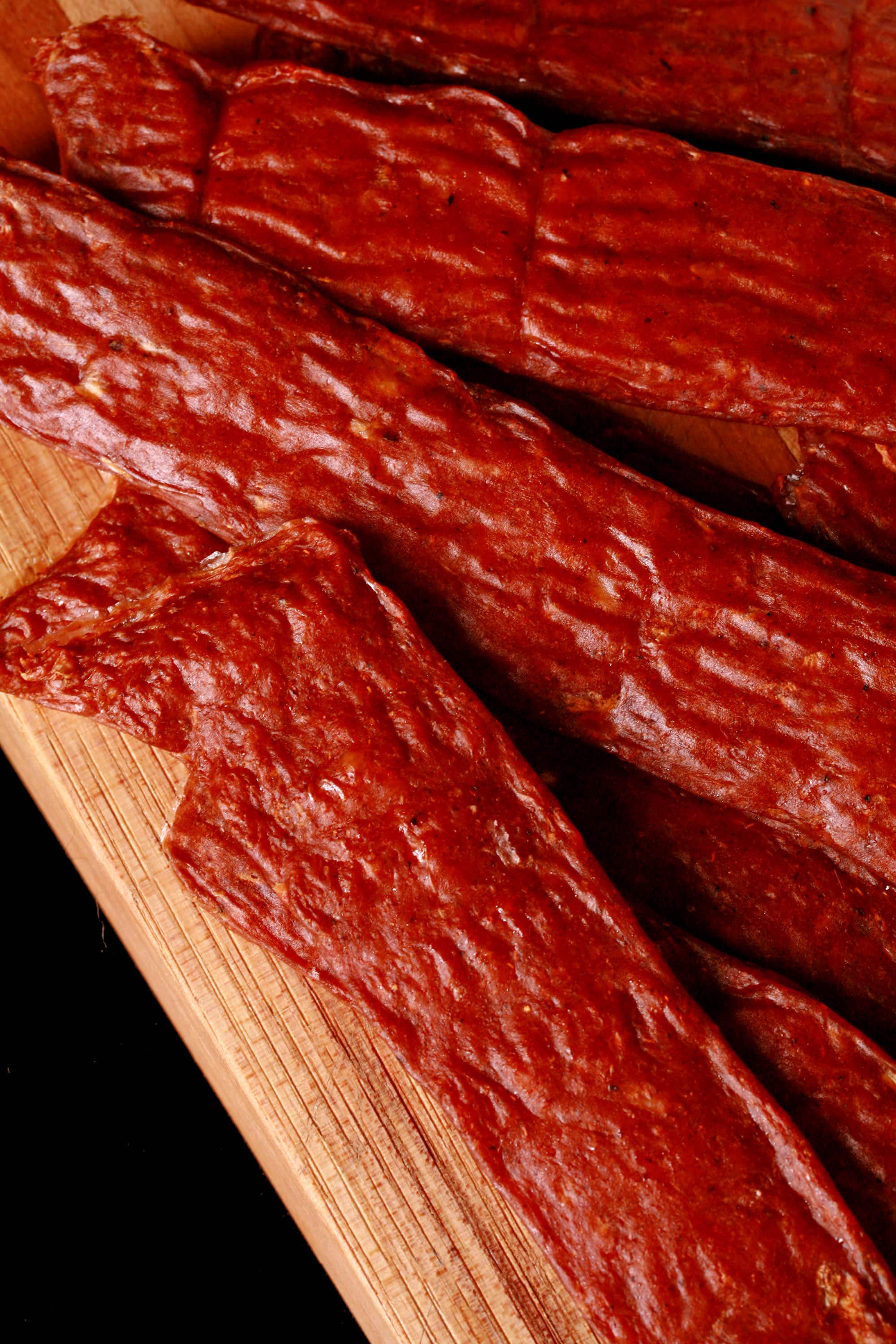
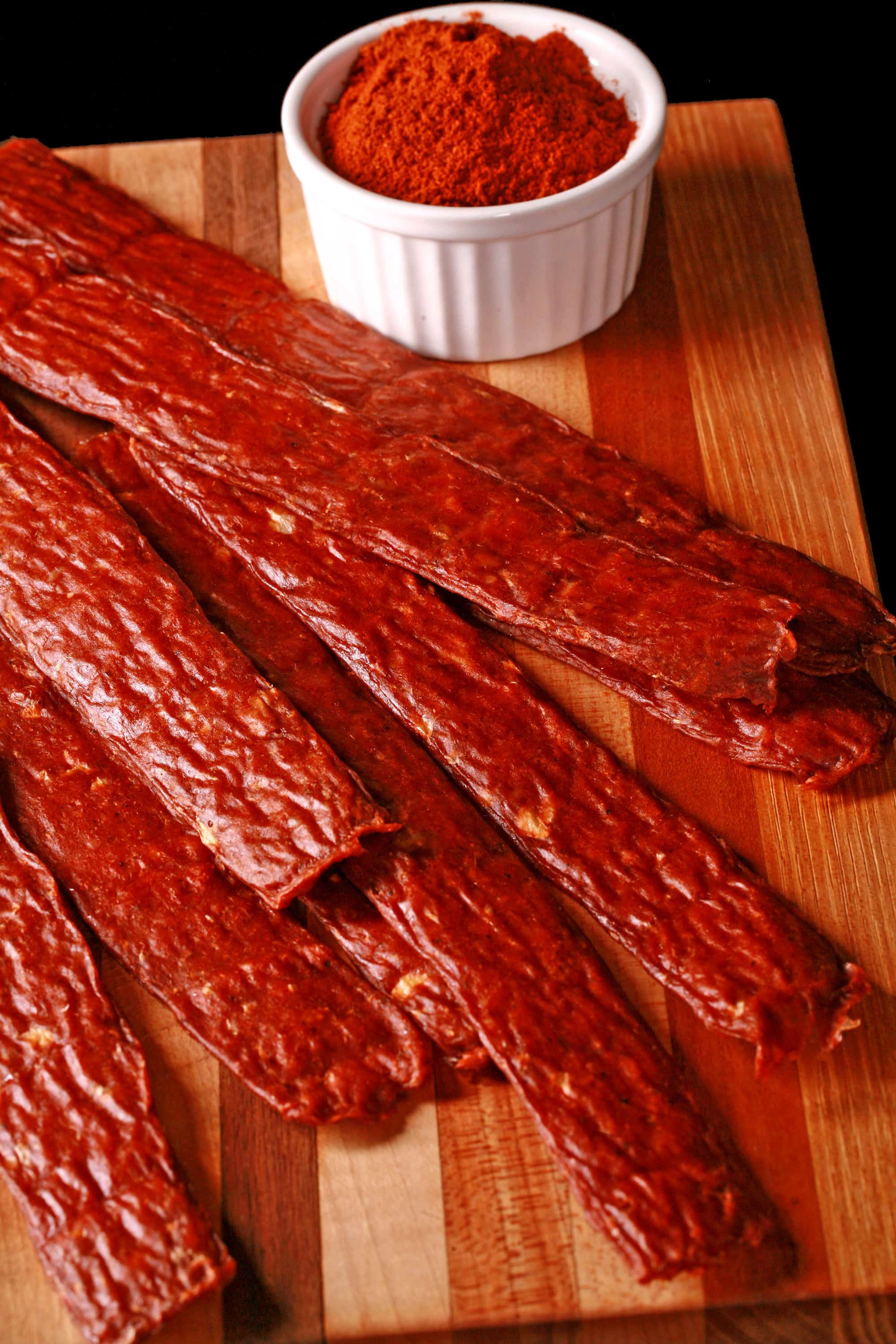
Berbere is a traditional Ethiopian spice mixture that works fabulously in this berbere chicken jerky recipe. A complex, flavourful heat!

We started making our own berbere seasoning maybe a decade or so ago, after we go hooked on Ethiopian food.
We didn’t always have ACCESS to Ethiopian food, so making our own berbere was our way of being able to have dishes like Yemisir Wat (A spicy lentil stew) or Doro Wat (A spicy chicken stew with eggs) whenever we want.
So, when we really got into making homemade jerky... obviously we had to try berbere in the mix!
It works PERFECTLY as jerky seasoning! The blend of spices in the berbere, a bit of pureed onion for the moisture... it just works really, really well with the smoky flavour of a basic jerky.
I’m sure it would work well in a beef jerky, but for now we’ve only been using it in chicken jerkies - as an homage to that doro wat we love!
Anyway, let’s look at the ingredients you’ll need:
Equipment
There are two specialized pieces of equipment that I use for making jerky, beyond basics like spoons, bowls, and measuring cups:
A Food Dehydrator
While you can apparently make homemade chicken jerky in a regular home oven, I’m not a fan of running one for hours on end.
I’ve had food dehydrators before - the basic kinds with no time or temperature controls, - and I’d always been too nervous to try making jerky in them. I need more control over - and knowledge of - the drying process, when meat is concerned.
I’ve since upgraded to a Cosori 6 Tray Food Dehydrator, and LOVE it.
It was only like $200 Canadian, and it’s paid for itself MANY times over, between all the Maple Cinnamon Apple Chips and jerkies I’ve been making!
Think of it this way - The same size of jerky that I tend to make goes for about $4 in a gas station. (Really, more for chicken jerky!)
I get about 10-15 strips out of a batch (varying by recipe) - let’s average that out to 12. That’s $48 worth of jerky, for $8 or less. Make 5 batches, that’s your $200 in savings!
Anyway, we’re using a dehydrator a LOT more, now that we have a nice one. Having the control over the temperature really opens up the possibilities.
A Jerky Gun
Also known as a “jerky cannon”, this is basically a food grace caulking gun that you use to pipe out strips of jerky onto your parchment paper.
Mine is the XINQIAO Jerky Gun Food Grade Plastic Beef Jerky Gun Kit . Regular $35 (Canadian) on Amazon, but it had a coupon for something like 25% off, when I purchased it.
Worth every penny, even if I’d paid full price!
I’ve heard of people making jerky by spreading the mixture out, flattening it with a rolling pin, then cutting it with a pizza cutter, but to be honest, that sounds fussy.
The very first time I used my jerk gun, I was HOOKED. I had no idea that the jerky making process could be so quick and easy!
I’ve never been one for single-function, special equipment in the kitchen... but I LOVE it.
Ingredients
With only a few exceptions, the ingredients in this Berbere jerky recipe are super simple - you probably even have them on hand!
One of those is the berbere spice itself... which may or may not be difficult to find, but IS really easy to make at home.
As for those last two, they may be specialty, but I use them in pretty much all of my jerky recipes. They’ll definitely get used, if you’re a jerky fan!
Some notes for you:
Lean Ground Chicken
Use the highest quality ground chicken you can when making chicken jerky.
While fresh or frozen will usually work in my jerky recipes, I recommend using fresh in this one, just due to the amount of liquid ingredients we’re adding.
If you want to make your own ground chicken, trim some boneless skinless chicken breasts - plain chicken - and run them through a food processor or meat grinder until well broken down.
Lean chicken breast meat will have a better shelf life than higher fat dark meat will - fat can go rancid.
Finally, if you want to make turkey jerky, feel free to use the same amount of lean ground turkey. For that matter, you can swap the meat our for whatever kind of ground meat you prefer!
Berbere Seasoning
Berbere is a flavourful and wonderfully complex African spice mix, used in a LOT of Ethiopian cuisine.
You’re not likely to find it in most grocery stores, though, so you’ll want to look in African markets, order it from specialty spice shops (usually not as good as what you get from African markets, though!), or make it at home.
Though recipes vary from person to person, they generally tend to use super basic spices.
Mine uses Allspice, Black Peppercorns, Dried Chilies, Cardamom Seeds, Coriander Seeds, Garlic Powder, Ground Cinnamon, Ground Ginger, Ground Nutmeg, Onion Powder, Salt, Smoked Paprika, Sweet Paprika, and Whole Cloves.
I’ve got my recipe included in the post for my Berbere Lentils Recipe (AKA Yemisir Wat) .
As a word of advice though: It’s an INTENSE spice. I recommend starting out with 1 tablespoon and seeing how you like it. This recipe calls for 1-2 tablespoons, sometimes we’ll do 2.5 for a really spicy jerky.
Liquid Smoke
As with all of my jerkies, you’ll need some Liquid Smoke - a little goes a lot way!
I only use a small amount in this berbere chicken jerky recipe, to give it a traditional “jerky” flavour - it’s not at all overpowering, just an accent.
Prague Powder
Prague Powder is one of a few different curing salts out on the market. It’s not something you’ll normally cook with, but it’ll last a long time - a little goes a long way!
I use Prague Powder #1 Cure, same as I use for my Montreal Smoked Meat Recipe, Back Bacon Recipe, Homemade Corned Beef Recipe, and Peameal Bacon Recipe.
This is a bright pink curing salt that’s a mixture of salt and sodium nitrite. It’s commonly used in cured meats - like pepperoni or summer sausages - and is what gives the jerky its characteristic red colour.
Beyond aesthetics, it also contributes to giving dehydrated meat that iconic jerky flavor, AND helps ensure that your homemade meat snack will be good to eat for a long time. It does this by preventing the growth of bacteria, during and after the drying process.
A couple of things to note:
1. Prague Powder is pink, but it is NOT the same thing as Himalayan pink salt!
2. Prague cure is only to be used in small amounts for curing meats, and should never be consumed as-is. The measurements are important - if you want a saltier berbere chicken jerky, add some regular salt, rather than increasing the curing salt.
Everything Else
Rounding out this recipe, you will need:
Onion - I usually use yellow or white onions
Ground Black Pepper
Ginger Puree
Salt
... as always, I don’t really have anything to add, when it comes to these last few ingredients!
Share the Love!If you’ve made one of our recipes, be sure to take some pics of your handiwork! If you post it to Bluesky, be sure to tag us - @CelebrationGen. We're also on Pinterest, so you can save all your favourite recipes to a board! Also, be sure to subscribe to our free email newsletter, so you never miss out on any of our nonsense. Well, the published nonsense, anyway! |
How to Make Berbere Chicken Jerky
The full recipe is in the printable recipe card at the end of this post, here is the pictorial walk through:
Cut 2 or 3 squares of parchment paper slightly smaller than your dehydrator trays, set aside.
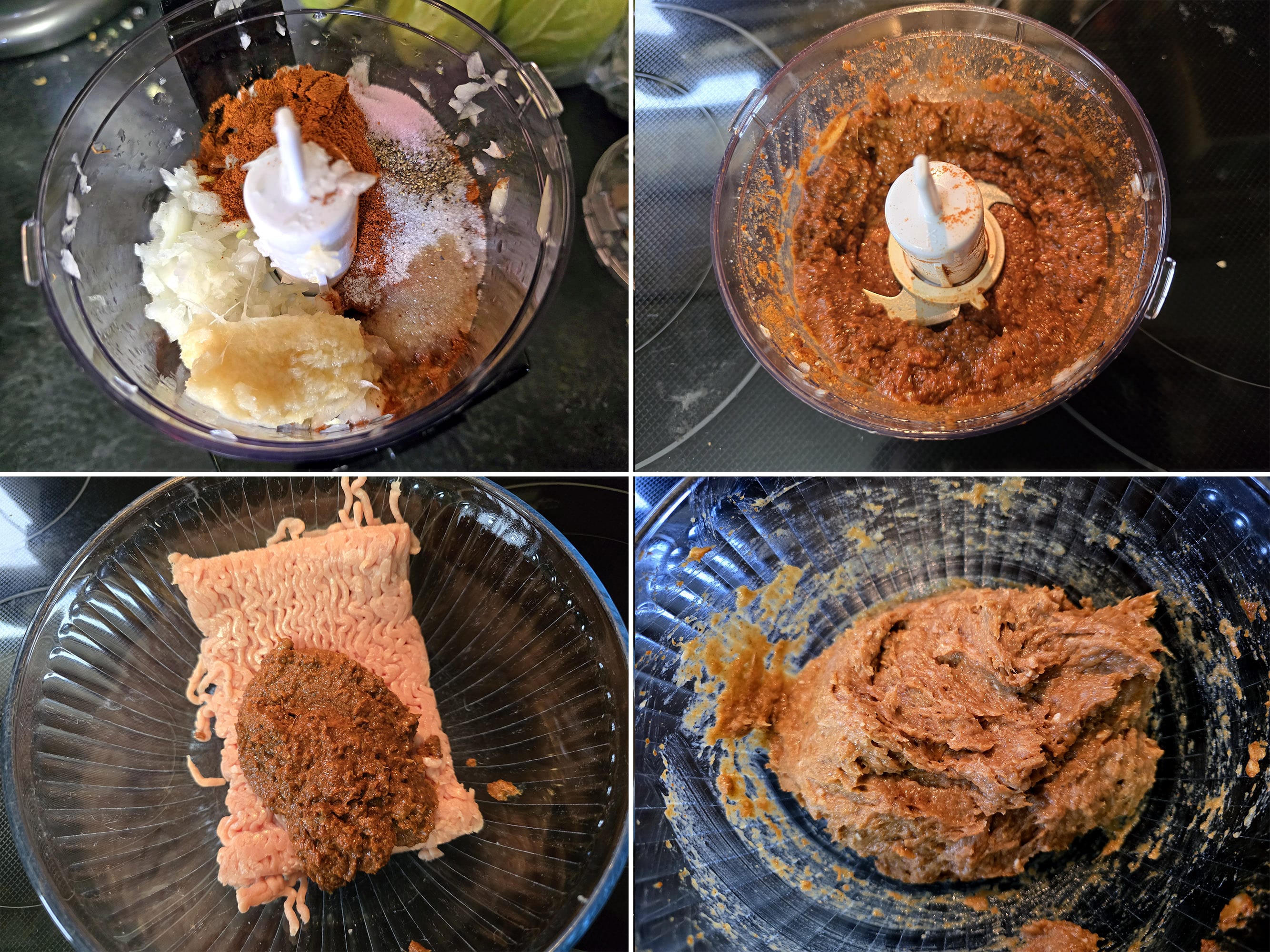
In a small food processor, combine onions, berbere, ginger, liquid smoke, black pepper, and prague powder. Blitz until smooth.
In a medium mixing bowl - using freshly washed or gloved hands - combine onion mixture with the ground chicken.
Mix it REALLY well - for best results, it’s better to overhandle it, than to under-mix it.
Line your dehydrator racks with the cut parchment paper, then pipe your jerky strips out onto them, leaving some space in between each.
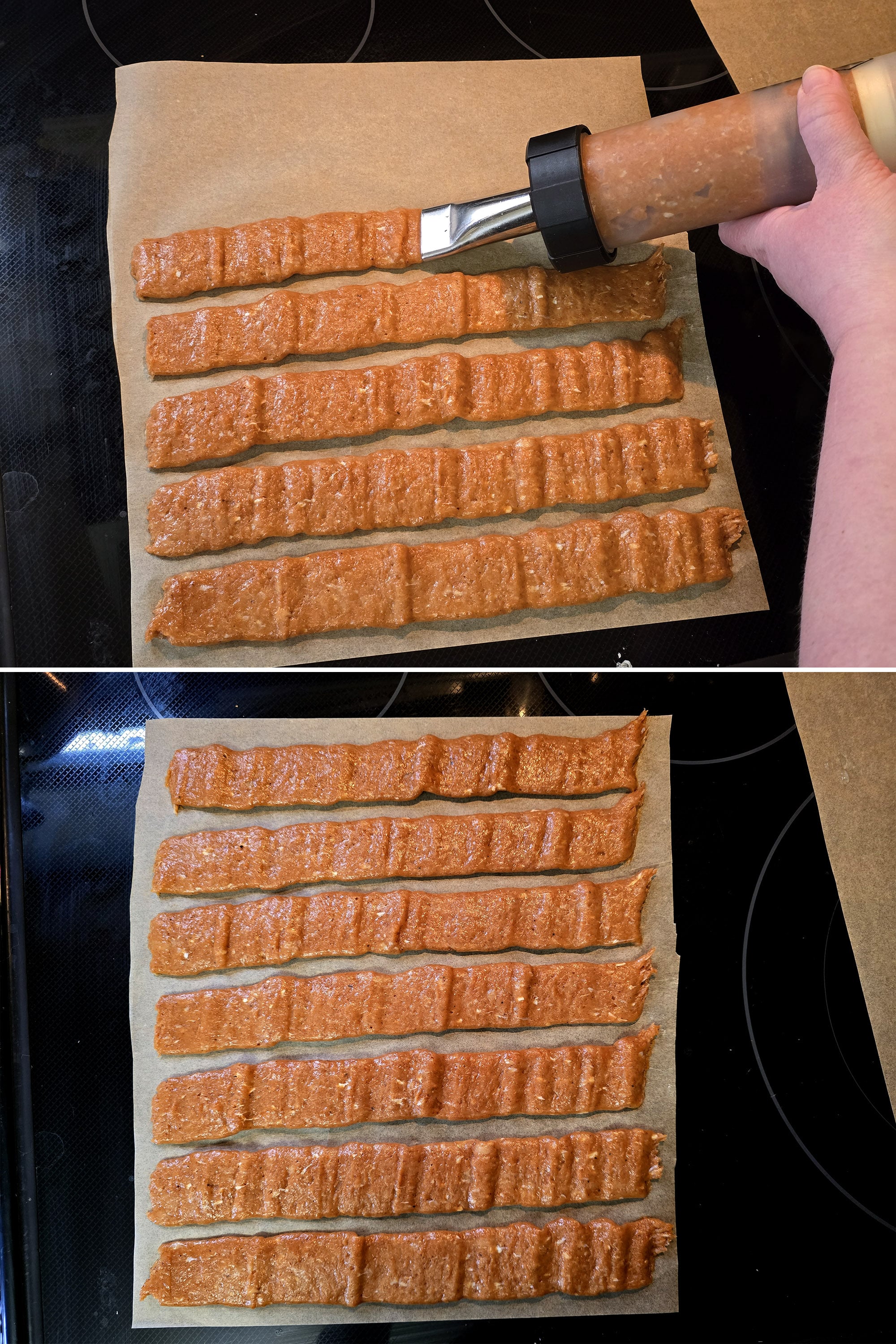
Dehydrate in a food dehydrator at 165 F for 2 hours.

Before and after the first round of drying.
Once two hours has passed, remove the jerky strips from the parchment, flip them over, and place them directly onto the wire rack.
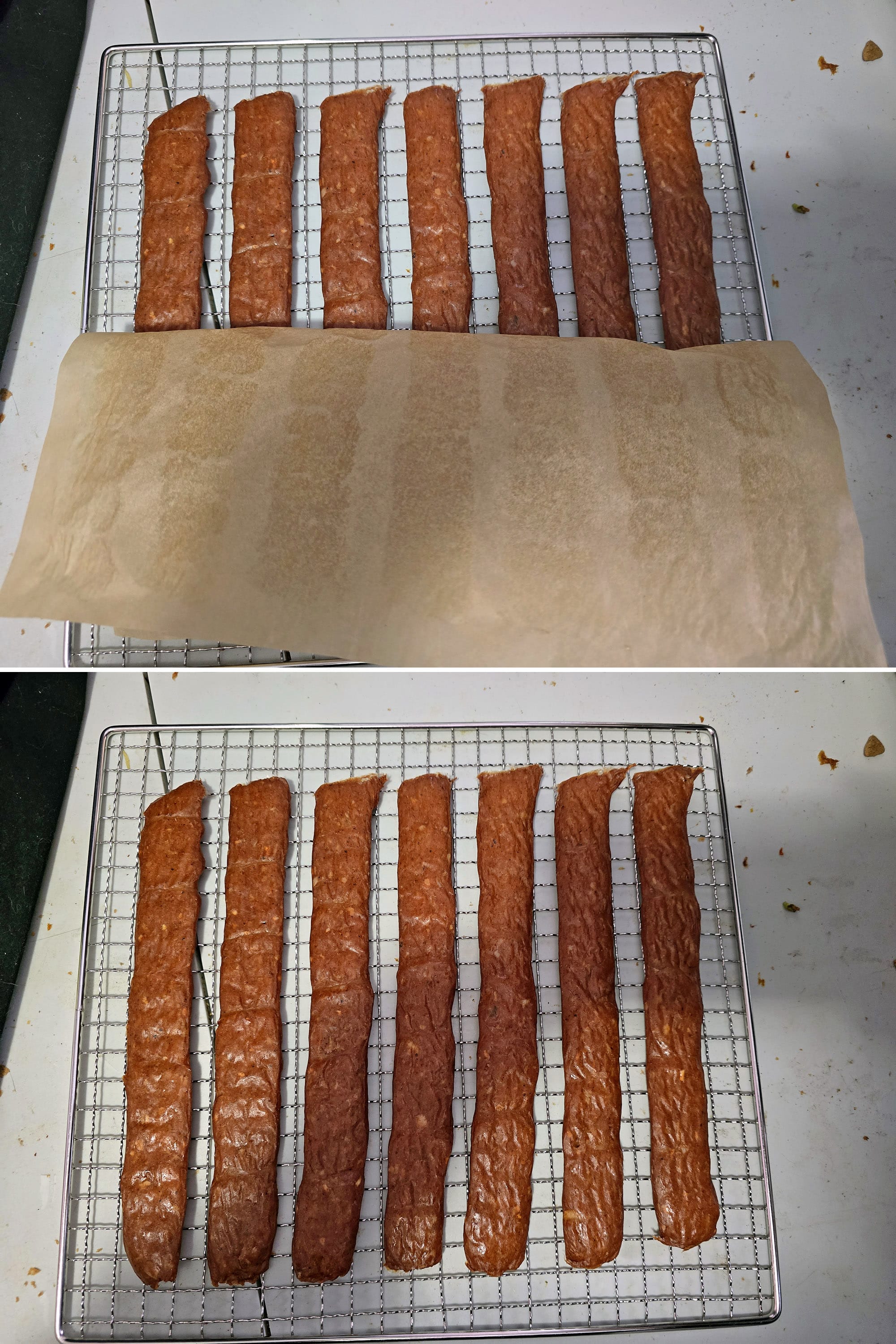
To test for doneness, remove a piece of Berbere chicken jerky from the dehydrator and let it cool to room temperature. It should feel dry to the touch and be able to bend to 90 degrees without breaking. (A bit of cracking or crackling is ok!)

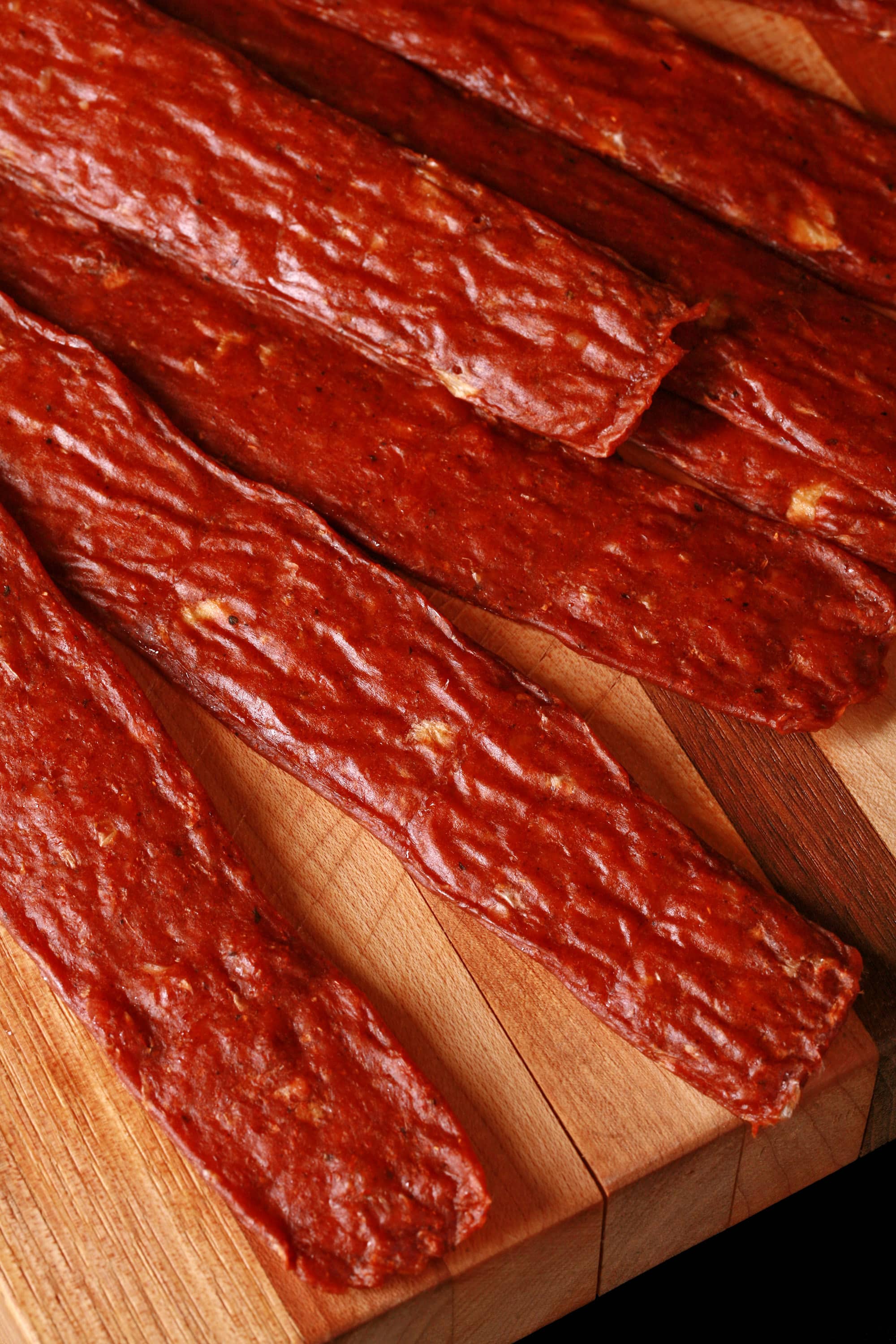
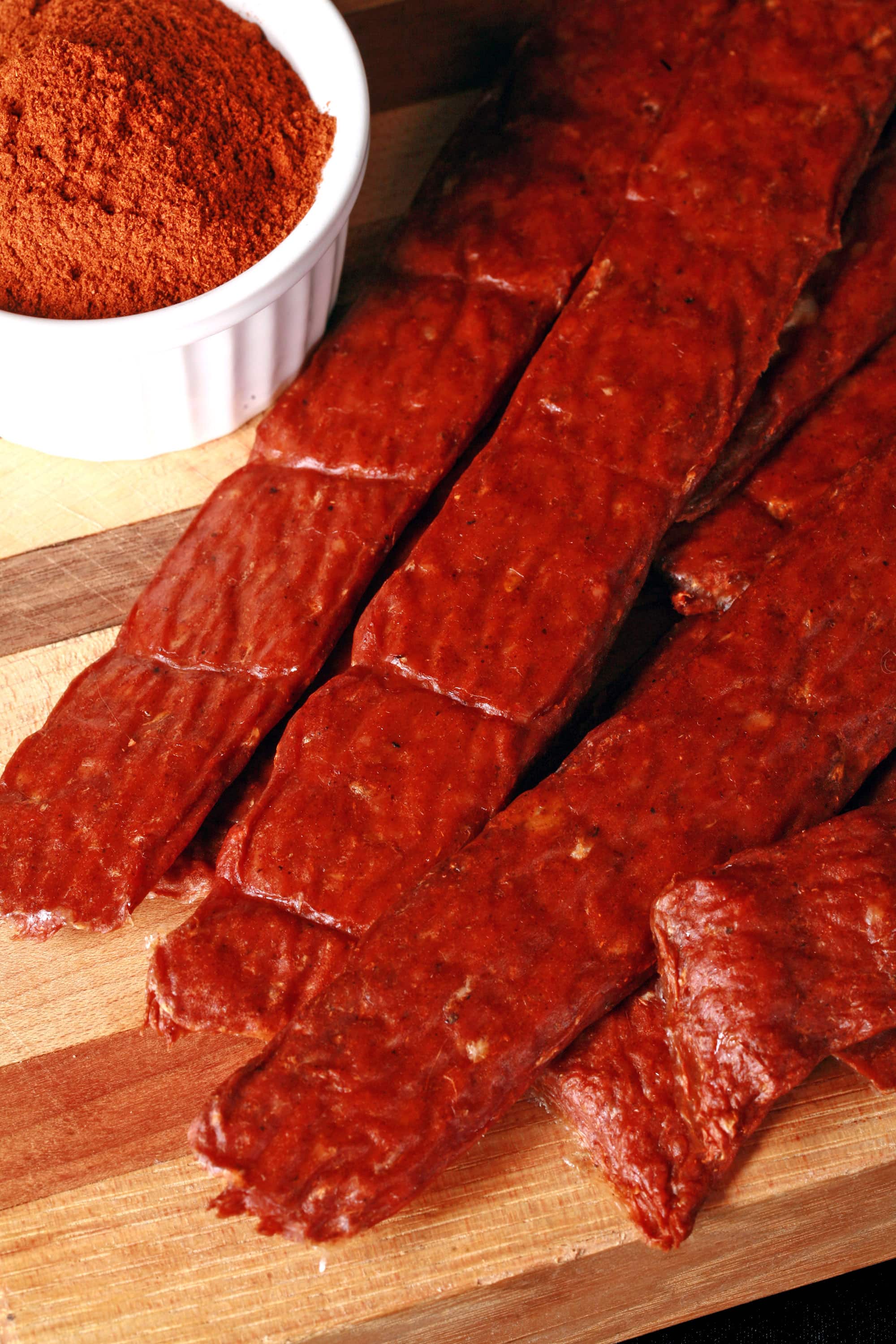
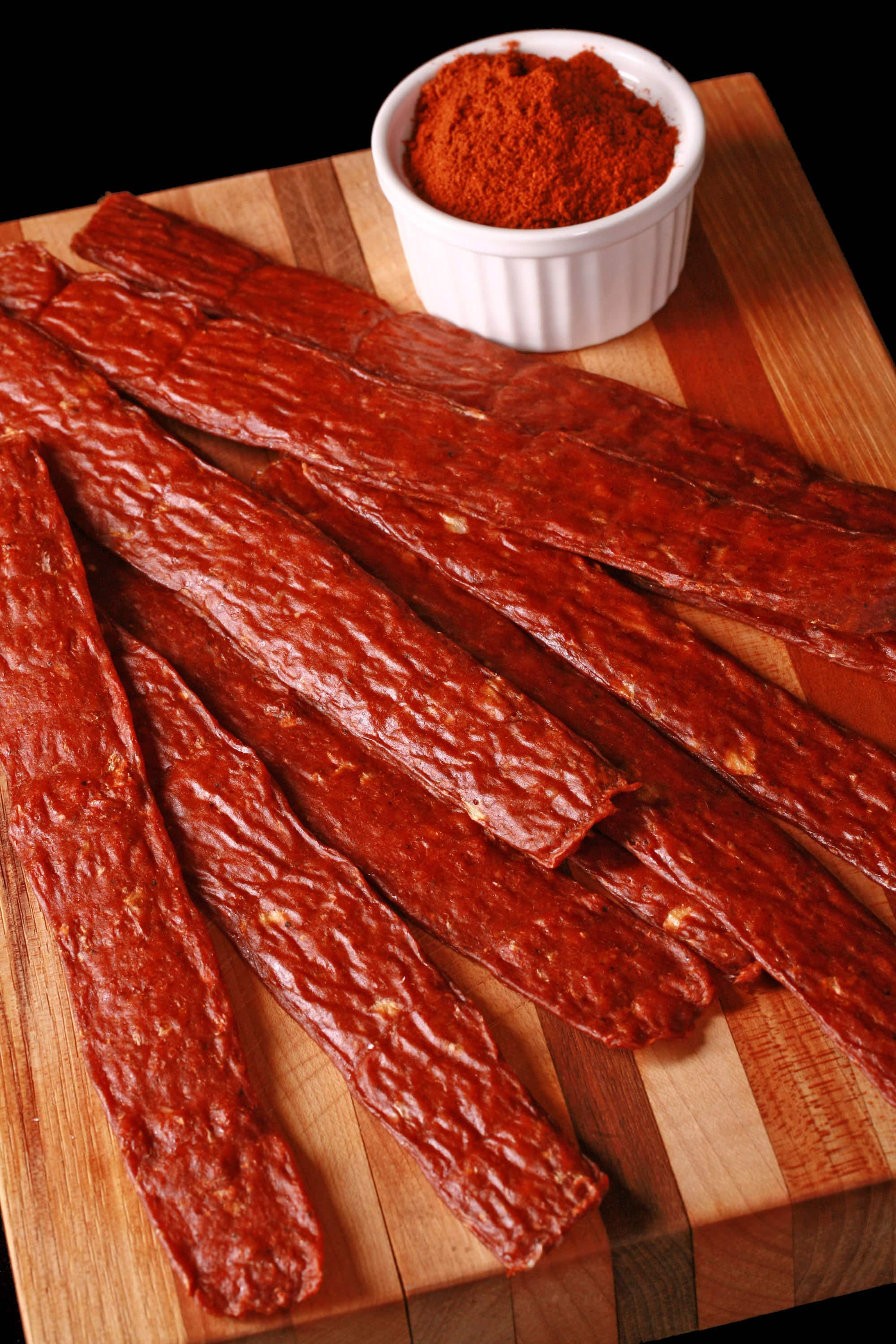
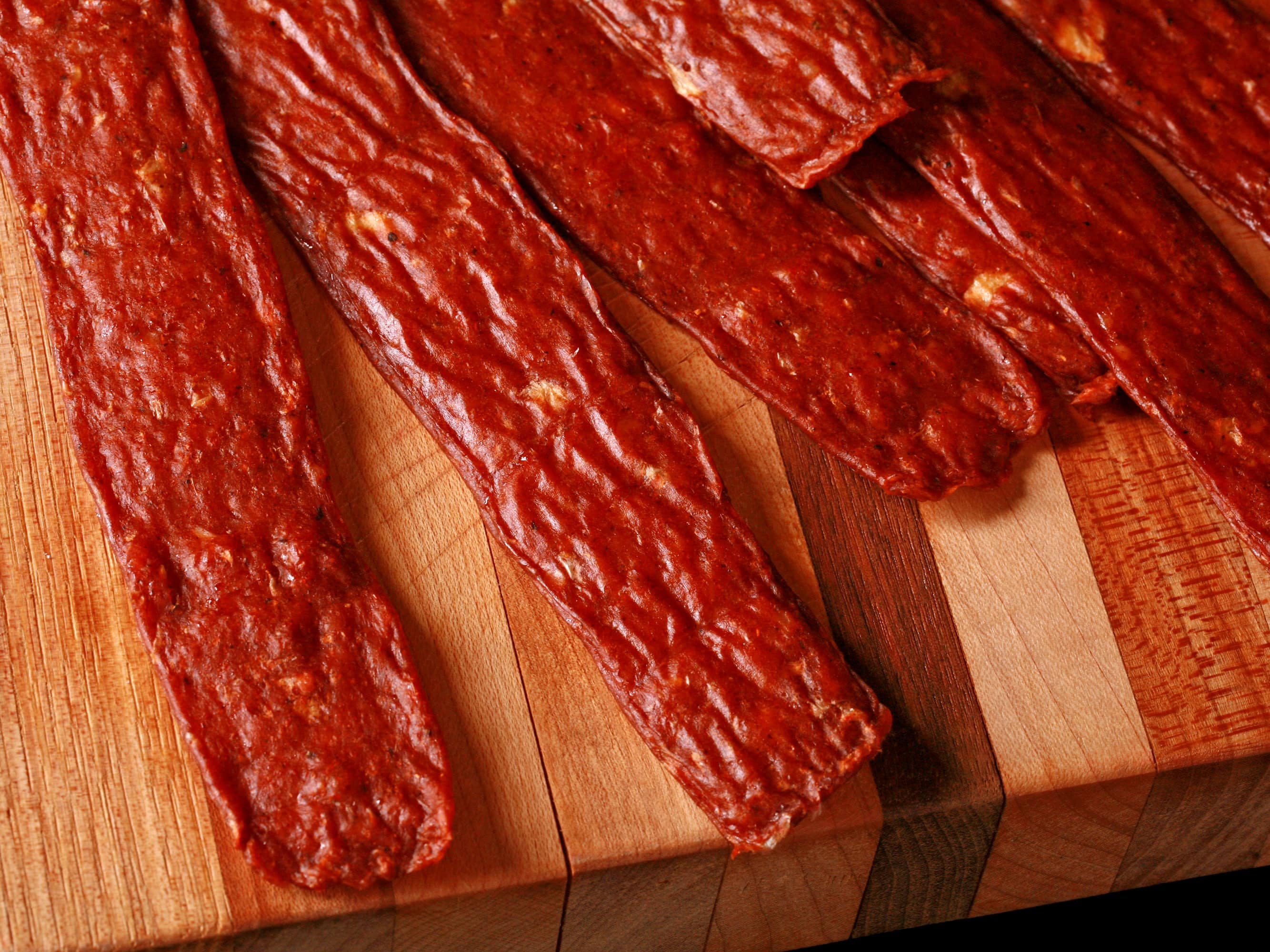
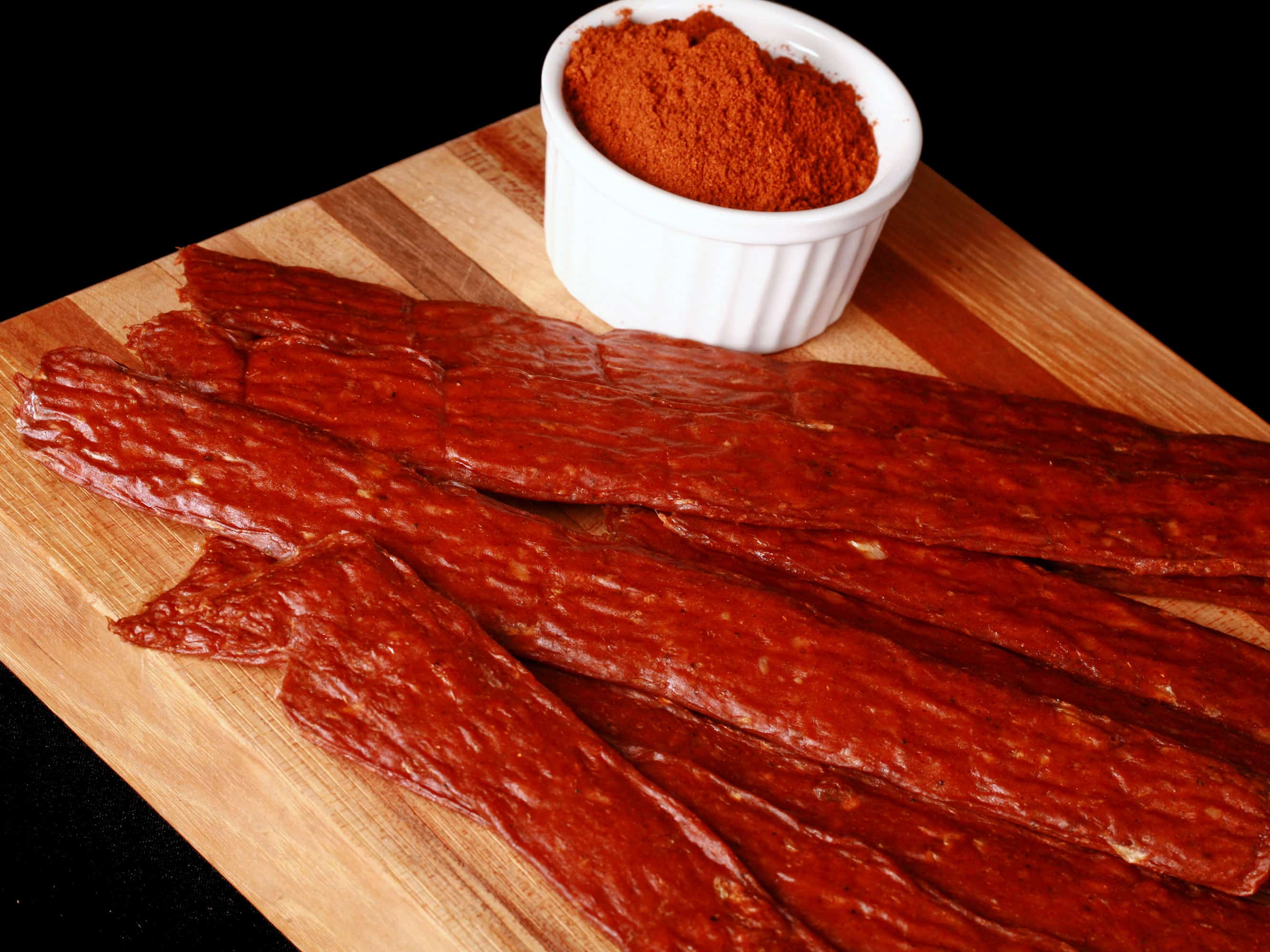
The finished Berbere Chicken Jerky
Berbere Chicken Jerky Storage
Allow jerky to cool COMPLETELY to room temperature before packaging.
Berbere jerky will keep at room temperature (in a cool dark place) for a week or so, or a few weeks in the fridge.
If sealed into an airtight container WITHOUT OXYGEN, it should be good for a month or so in a cool dark place, a couple months in the fridge, and 6 months or so in the freezer.
Once you open your vacuum sealed bag of chicken jerky, it should be eaten within a couple days - or a week, if put in the fridge after opening.
More Homemade Jerky Recipes
Are you someone who loves to bring jerky on road trips, hiking trails, and when camping? Me too! Here are some of my go-to recipes for homemade jerkies!
Basic Ground Beef Jerky
Blueberry Bison Jerky
Chipotle Chicken Jerky
Ginger Beef Jerky
Ground Venison Jerky
Homemade Salmon Jerky
Honey Garlic Chicken Jerky
Jalapeno Chicken Jerky
Jerk Chicken Jerky
Lingonberry Elk Jerky
Mango Habanero Chicken Jerky
Mushroom Jerky, 2 Ways
Pumpkin Spice Chicken Jerky
Rosemary & Blueberry Beef Jerky
Spicy Garlic Chicken Jerky
Sriracha Chicken Jerky
Tofu Jerky, 2 Ways
Pepperoni Jerky
Berbere Chicken Jerky [Ground Chicken Jerky]
Equipment
- 1 Jerky Gun
- 1 Food Dehydrator
Ingredients
- ½ cup Finely Chopped Onion
- 2-3 tablespoon Berbere Seasoning
- 1 tablespoon Ginger Puree
- 1 ½ teaspoon Liquid Smoke
- ¾ teaspoon Salt
- ¼ teaspoon Ground Black Pepper
- ¼ teaspoon Prague Powder #1 Cure
- 1 lb Lean Ground Chicken
Instructions
- Cut 2 or 3 squares of parchment paper slightly smaller than your dehydrator trays, set aside.
- In a small food processor, combine onions, berbere, ginger, liquid smoke, salt, black pepper, and prague powder. Blitz until smooth.
- In a medium mixing bowl - using freshly washed or gloved hands - combine onion mixture with the ground chicken. Mix it REALLY well - for best results, it’s better to overhandle it, than to under-mix it.
- Use a spoon to load the mixture into a jerky gun, taking care to avoid creating air bubbles.
- Line your dehydrator racks with the cut parchment paper, then pipe berbere jerky strips out onto them, leaving some space in between each.
- Dehydrate in a food dehydrator at 165 F for 2 hours.
- Once two hours has passed, remove the berbere chicken jerky strips from the parchment, flip them over, and place them directly onto the wire rack.
- Return to the dehydrator and continue dehydrating at 165 F for another 2 - 3 hours. (Actual time will depend on the thickness of the chicken jerky strips.)
- To test for doneness, remove a piece of jerky from the dehydrator and let it cool to room temperature. It should feel dry to the touch and be able to bend to 90 degrees without breaking. (A bit of cracking or crackling is ok!)<
- Allow Berbere Chicken jerky to cool COMPLETELY to room temperature before packaging.
Notes
Nutrition
Thanks for Reading!If you loved this post - or have any questions about it - please leave a comment below! We'd also love it if you would consider sharing the link on social media! |


Porters
One of our favourite jerky recipes - hope you love it as much as we do!